
 CONFERENCE

Every year in Latvia, substantial resources are invested in adults’ professional development at national, organisational and individual levels. Yet are the knowledge and skills acquired at seminars and on courses always actually used and useful in day-to-day professional work? How do the experiences gained through professional development improve people’s wellbeing? Since late 2023, an interdisciplinary research team at the Scientific Institute of Pedagogy within the University of Latvia’s Faculty of Education Sciences and Psychology has been seeking answers to these and related questions, together with colleagues from RTU Liepāja Academy and Ventspils University of Applied Sciences. They are working together on the State Research Programme (SRP) “Education” project “Elaboration of evidence-based solutions for effective professional competence development of adults and assessment of the transfer of its results into practice in Latvia” (project No. VPP-IZM-Izglītība-2023/4-0001). The programme’s overarching aim is ‘to contribute to evidence-based decision-making on the development of the education system and the achievement of strategic educational development goals, and to generate new knowledge and practically applicable solutions at the level of educational institutions, local government and the state’. The project is developing an evidence-based framework and practical solutions for the effective development of professional competence among adults, including teachers, and the transfer of learning outcomes into practice, offering tools for assessing the impact of professional development on practice in Latvia.
The aim and objectives are complex, but the central question is simple: why do we sometimes learn without using what we have learnt, and what can we do to change this? How can we ensure that professional development is more than a formal exercise and becomes a purposeful means of improving the working environment and results? In today’s labour market, investment in employee education often resembles an idling engine: resources are spent and training is attended, yet the real power — translating knowledge into practical action — fails to materialise. This strategic gap between learning and practice means that valuable insights often remain in notes, ideas and folders of reports, without leading to improvements in work processes. In Latvia, adults’ professional development is linked to a serious productivity challenge: insufficient knowledge transfer directly limits the sustainable development of the national economy. If newly acquired skills are not integrated into everyday processes, businesses receive a low return on their human capital, holding back national growth. Many of us may recognise a situation in which an employee attends expensive professional development training, gains new knowledge and receives a certificate, but a few weeks later everything at work is carrying on as before. Changing this requires a scientifically grounded approach that helps turn learning experiences into real value for individuals and the economy.
The strength of this project lies in the diversity of its team. Researchers from three higher education institutions represent education sciences, economics, business and psychology. This reflects the nature of adults’ professional development, which is at once educational, psychological and economic: understanding it in depth and developing solutions requires these different perspectives to be brought together.
From theory to practice
In the first phase of the project, the investigation of challenges and opportunities in adults’ professional development began with a review of existing international research. The team examined more than 60 meta-analyses and reviews — scientific publications that bring together the findings of dozens or hundreds of other studies. The conclusion is that effective professional development depends on more than the excellence of the educators delivering it or the quality of the learning content and materials. It depends on a whole set of factors, ranging from employees’ own willingness to learn to whether their managers encourage them to apply what they have learnt afterwards, as well as the workplace environment and support from colleagues.
Examples of best practice from European countries were also identified. Through an in-depth analysis of carefully selected examples from Lithuania, Norway, Estonia, Croatia and Germany, the researchers concluded that adults’ professional development really does change everyday practice when it is well thought through, purposeful, based on the needs of employees in a particular workplace and connected to that working environment.
The second phase assessed the current situation in Latvia by analysing policy documents, previous research and reports from public institutions on adults’ professional development and its transfer into practice. In late 2024, the team also held 11 focus group interviews with providers and recipients of adults’ professional development, alongside three expert discussions. A total of 129 people took part: providers (higher education institutions, training centres, technical colleges and schools); recipients (employees and employers from eight major sectors: public administration, education, healthcare, transport, agriculture, manufacturing, trade and construction); and experts (ministries and their subordinate agencies, sectoral expert councils and social partners). Participants’ accounts revealed that Latvia has motivated people who want to learn and education providers striving to offer high-quality programmes. However, the system as a whole does not work as well as might be expected, often because the tasks undertaken by the various parties are not fully coordinated.
The professional development available often fails to meet actual needs. Courses may be too general, too expensive or available only in certain cities. Programmes financed by EU funds are sometimes seen as an opportunity rather than a genuinely useful experience. Employers do not always support employees during or after training. An employee may return with new skills and ideas for applying them, but if their manager is uninterested or the organisational culture does not support change, the knowledge remains unused. Learning outcomes are poorly evaluated, and sometimes the main concern is simply whether a certificate has been obtained. How is the training useful? In Latvia, this question is often left unanswered: there are no common criteria, no systematic assessment tools and no clear accountability mechanisms. Representatives of large, medium-sized and small businesses alike identified the quality of provision as the main challenge in professional development. There are no tools to help assess the quality of different adult education programmes and professional development courses. Businesses are willing to invest in professional development, but the investment does not always pay off.
In spring 2025, as part of the study, TNS Latvia Ltd (Kantar) conducted a representative survey of Latvia’s employed population, commissioned by the University of Latvia. Its aim was to explore adults’ motivation, behaviour, habits and opportunities when choosing professional competence development and transferring learning into practice. An online survey and telephone interviews were used to reach the required target group of 1,000 respondents across Latvia, ensuring that the data were representative by age, sex, ethnicity, region, educational attainment and sector of employment. The sample was constructed using a combination of quota and random sampling. Analysis showed that 517 of the 1,000 adults surveyed had taken part in professional development activities during the 12 months preceding the survey. The results are both encouraging and instructive. One in two respondents (52%) had sought information about learning opportunities over the previous year. The same proportion (52%) had learnt something independently and used it at work. Almost half (49%) had attended courses, seminars or conferences.
However, clear differences also emerged. Women, younger employees, university graduates, people working in education or healthcare, and those employed by large companies tend to participate in learning more often. Men, older employees, people with lower educational attainment and those working in manufacturing or transport do so less often. The three main reasons why some people do not participate? Training is too expensive, provision does not meet individual needs, and learning is difficult to combine with work. Those who do learn and apply what they have learnt report that the greatest influences are content that is genuinely useful at work; an excellent educator or trainer; and a sense of confidence after the training that they know and can do much more than before.
Research-based studies in education sciences at the University of Latvia and their contribution to teachers’ professional development practice
The project’s findings have already been presented at almost 20 international conferences, from Latvia to Japan. Research articles have been published in prestigious journals, including several in top-tier academic journals. Alongside these research achievements, involving students in major research projects has also become established practice. At the University of Latvia, three master’s dissertations in education sciences have already been successfully defended as part of this project, and a fourth is currently in progress. Since the project examines teachers as a distinct adult target group, the early-career researchers at the University of Latvia have focused their master’s dissertations specifically on teachers’ professional development.
Writing master’s dissertations within this project has enabled early-career researchers to gain practical research experience and develop solutions and recommendations for improving specific aspects of the working environment in educational institutions.

Inga Grigaļuna’s master’s thesis defence (28 November 2024)
Inga Grigaļuna, an inclusive education adviser at Patnis private school, wrote her master’s dissertation on ‘Effective professional competence development for preschool teachers in inclusive education’. Master’s students usually become involved in research projects when the project’s research objectives align with their professional and research interests. Reflecting on how working within the National Research Programme project influenced her dissertation and research process, Inga says: ‘I have worked in preschool education for more than ten years, with personal experience of inclusive education from my very first day. As a teacher, I often encounter difficulties arising from a lack of support for professional competence development. As an education adviser, it is very important to me to understand how to support teachers in delivering effective inclusive education. Taking part in the study was therefore extremely valuable in deepening my knowledge of what effective professional competence development means and how to transfer it into everyday practice. Participation in the project strengthened my research skills because I worked in a professional research team that sets a very high bar for its goals. Collaboration and support across the whole project team were particularly valuable, including consultations, methodological support and assistance with research design, data analysis and publications. Working as part of a research team has been a very significant experience in my academic life.’
Inga goes on to explain: ‘The topic of my master’s dissertation was shaped by the challenges I observed in my daily work as an education adviser: preschool teachers’ understanding of what inclusive education is, its many different aspects and how to implement it successfully. Preschool teachers lack practical experience of how to include every child. Professional competence development in inclusive education focuses more on children with special educational needs and children from ethnic minorities, while other important aspects, such as working with gifted children, are not addressed. My dissertation therefore focused on identifying preschool teachers’ learning needs to help establish what kind of professional competence development would most effectively support them in delivering inclusive education. The research experience highlighted how important it is to base learning on individual learning needs, which cannot always be identified without additional resources.’ Inga Grigaļuna’s study revealed learning needs in inclusive education that preschool teachers had previously been unable to identify themselves in their everyday work without the questionnaire developed for the study. It also showed that teachers’ learning needs differ between preschools. Diverse forms of professional competence development are important: these include not only attending courses individually, but also collective learning, opportunities to exchange experiences, mentoring and other activities. These provide practical experience, support its transfer into everyday work and collaboration with colleagues, and encourage teachers’ self-reflection. This, in turn, informs further professional development that supports effective inclusive practice.
Since gaining her master’s degree, Inga has continued to work as an inclusive education adviser at Patnis private school, supporting both preschool and school teachers in delivering inclusive education by assessing each child’s individual needs. ‘I also lead professional competence development seminars for teachers, adapting each seminar to its audience. Thanks to my dissertation research, which identified teachers’ different learning needs, I have realised that no two seminars can be identical. When sharing my experience of inclusive education with teams from different preschools and schools, I always establish the teachers’ learning needs in that particular institution beforehand. The seminar content is then based on those needs. So far, I have not even delivered the same presentation twice.’
The implementation of inclusive education is widely discussed in public and is sometimes criticised by both the public and teachers. Inga Grigaļuna’s research revealed a continuing lack of understanding of what inclusive education involves and how to implement it, as well as a lack of the support teachers need. Preschool teachers’ learning needs in inclusive education are highly varied. They acknowledge a shortage of effective professional development that helps them in everyday practice. Teachers’ professional competence development needs to be more individualised, taking their different learning needs into account. ‘Often it is also a question of attitudes: are we, as a society, able to accept difference without judgement? Inclusive education encompasses more than children with special educational needs. It also includes children from different cultural or religious backgrounds, exceptionally gifted children and others. To support teachers in implementing inclusive practice, it is important to provide varied professional competence development, primarily involving methods tested in practice. We need to highlight examples of good practice to shift attitudes from “everything is difficult” to “everything is possible”,’ Inga explains.
The main practical recommendations from Inga Grigaļuna’s master’s research are as follows: ‘Professional development should make employees more effective. Several important criteria are often overlooked, yet are essential for the effective transfer of professional development into practice:
content that meets individual learning needs;
opportunities to learn from practical experience;
a range of learning formats;
reflection on transfer into the workplace;
mentoring support and supervision;
management involvement in planning and delivering professional competence development.’
She emphasises that no two seminars are the same because the needs of teachers in each institution are unique, so professional development must be individualised. As Inga notes, working in the research group enabled her to operate in an environment with high expectations while receiving the methodological support she needed.

Maija Vilnīte’s master’s thesis defence (30 April 2025)
Maija Vilnīte chose the topic of her master’s dissertation, ‘The role of educational institution management in promoting the effective transfer of teachers’ professional development into practice’, out of a personal desire to explore in depth how the existing system could be improved to better support teachers’ professional growth and the transfer of professional development outcomes into teaching and learning. Maija explains: ‘I have worked as a deputy head responsible for teaching methodology for more than three years, supporting more than 60 teachers in my day-to-day work. This is a considerable challenge, given their different professional experiences, personalities and work-related needs. While organising professional development at my school, I became interested in exploring the role of management in ensuring a differentiated approach that responds to individual needs. I particularly valued the opportunity to write my dissertation within the research project, as it enabled me to gain a deeper understanding of the scientific research process and valuable experience of how research is organised and conducted at the highest academic level. Taking part in focus group interviews with representatives of different sectors was especially valuable, offering insight into professional development practices in other sectors and an opportunity to compare them with approaches and experiences in teachers’ professional development.’ An important conclusion from Maija Vilnīte’s research is that ‘if school management develops an internal organisational culture that promotes learning by arranging masterclasses and learning groups, and helping teachers see the connection with theory through practical examples and tasks, this can substantially improve transfer outcomes. Teachers need to be involved in decisions about their own professional development, thereby strengthening each teacher’s individual responsibility for their professional growth.’

Agija Dace Bidiņa’s master thesis defence (27 November 2025)
In her master’s dissertation, ‘Wellbeing in the quality management of teachers’ professional development’, Agija Dace Bidiņa points out that teachers’ professional development encompasses not only courses, lectures and seminars, but also everyday work, collaboration with colleagues and independent exploration of available resources. This process can be managed at three levels: national, institutional and individual — that of the teacher. Each level can support the management of the professional development system in terms of its format, content, everyday professional learning and quality. Following the recommendations developed in the dissertation makes it possible to embed teachers’ wellbeing within the professional development system, helping teachers feel better in their profession and wish to remain in it, while providing pupils with more creative, varied and higher-quality teaching and learning.
Agija explains: ‘The topic had to matter to me personally so that the outcome of my master’s research would be meaningful and could change something or improve the current situation. During my time working in education, I have experienced burnout and have not felt a sufficient sense of wellbeing. In consultation with my prospective dissertation supervisor, we arrived at the topic of supporting teachers’ wellbeing through the quality management of professional development. Teachers’ professional development is an invisible part of the profession that takes up a great deal of time and also takes place in everyday work. There was then an opportunity to join the project through my topic, and I certainly took it. Through learning and, in particular, research activity, my experience in the project has broadened my perspective: it is a process of continuous growth and development that is neither quick nor easy, but is essential for making improvements both individually and on a wider scale. Since gaining my master’s degree, my outlook on the things around me has changed. I feel better able to analyse them, and I understand different causes and outcomes within the education system more precisely.’
Agija says that her dissertation research and her work on the project fitted together ‘like a glove’. For her dissertation, she was able to conduct a content analysis of interviews with experts from educational institutions carried out within the project. ‘The outcome of my dissertation was to bring together findings relating to teachers in Latvian general education, the content analysis of education experts’ interviews and the theoretical analysis in a framework with recommendations on how to embed wellbeing in the professional development system. The wider project also aims to develop a framework, and the ideas from my dissertation form a small part of it. Overall, participating in the project helped me understand the research process better and gave me opportunities to consult researchers.’
Agija Dace Bidiņa’s research also contributes an explanation of the multidimensional nature of professional development: ‘Teachers’ professional development encompasses not only courses, lectures and seminars, but also everyday work, collaboration with colleagues, independent exploration of available resources and other activities. This process can be managed at three levels: national, institutional and individual — that of the teacher. Each level can support the management of the professional development system in terms of its format, content, everyday professional learning and quality.’
Agija Dace Bidiņa highlights a key conclusion from her research: ‘A safe and positive working environment, access to a support system, collaboration and communication with colleagues, and other factors are important for teachers’ wellbeing. Teachers in Latvian general education most often develop professionally by independently exploring available resources and working with colleagues — activities they also regard as useful. Peer lesson observation and mentoring support are the least common activities, and respondents also regard lesson observation as the least useful form of professional development. On average, the Latvian teachers surveyed are only partly satisfied with their wellbeing, so it is important to incorporate it into professional development. To organise high-quality professional development, teachers’ wellbeing must be considered when planning its formats and content and establishing support systems for everyday work.’
Towards a framework for adults’ professional development
Overall, the findings confirm that successfully transferring knowledge and skills into practice requires purposeful, clearly defined cooperation between individuals, organisations and public administration. Drawing on the analysis of all data collected so far, in the third phase the project team is developing a framework for effective professional competence development among adults. In the Latvian context, this sets out the processes needed to ensure that professional development genuinely changes working practices; the indicators to be assessed at individual, organisational and national levels; and the tools that can be used to measure them.
In autumn 2025, the proposed framework was discussed with 23 experts from the Ministry of Education and Science, the Ministry of Economics, the State Education Development Agency and sectoral expert councils. Heads of educational institutions and teachers also provided feedback. The Ministry of Economics has expressed interest in using the project’s conclusions when developing the Human Capital Development Strategy for 2028–2035. Following experts’ recommendations, the draft framework was revised and sent for assessment to 152 representatives of different sectors who had participated in activities organised within the National Research Programme ‘Education’ project — the 2024 focus groups and/or the 2025 discussions. Feedback was received from 23 experts, and the framework was revised again.
In the fourth phase, the researchers plan to turn theory into practice by developing specific, user-friendly tools for organisations and educational institutions, as well as recommendations for national policymakers. This is particularly important now, as Latvia faces rapid changes in the labour market linked to digitalisation, demographic challenges and sustainability. People’s ability to adapt and acquire new skills is becoming one of the most important factors in the country’s competitiveness. At the same time, resources are limited, and every euro invested in professional development must deliver a return.
The findings show that purposeful, effective professional development increases prosperity and supports sustainable national development by turning individual skills into collective competitiveness.
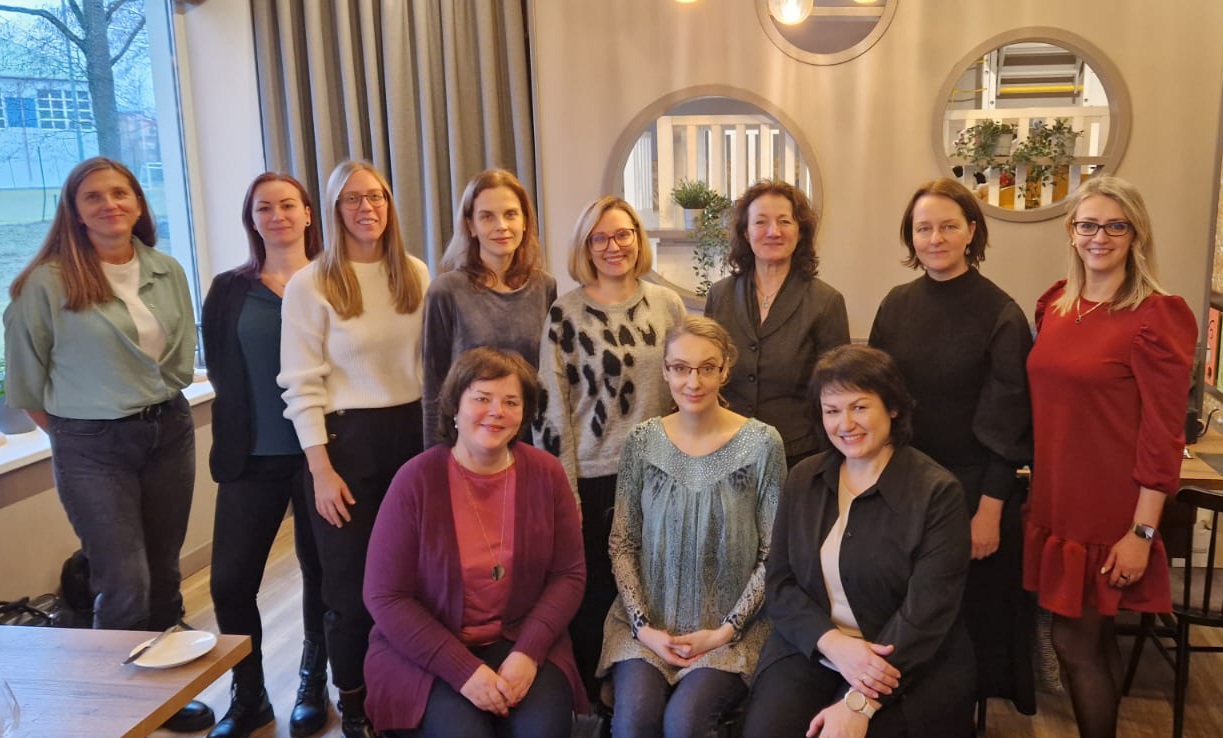
Project team meeting (27 January 2025)
The project’s interdisciplinary research team works regularly with policymakers so that its findings can help improve national education strategies. At different stages of analysis, the project’s results are also discussed in University of Latvia courses on adult education and pedagogy.
There is no single ‘formula’ for addressing the effectiveness of adults’ professional development and assessing the transfer of its outcomes into practice. Professional development is itself highly dynamic, but key principles can be identified for those involved at different levels of its delivery and assessment.
In society and in workplaces, attitudes to learning as a formal exercise need to change, with greater recognition of learning as a continuous, transformative process. Every adult learner must take active responsibility for their own learning. It is important to do more than ‘attend courses’ and ‘collect certificates’: during and after training, learners should identify at least one practical element to introduce or change in their everyday work. Employers need to link professional competence development planning directly to organisational goals, while also taking employees’ needs and career development into account. Involving employees in identifying professional development needs and planning learning, and providing support, are essential conditions for effective learning through professional development. Adult educators must offer learning that meets the real needs of organisations and employees in its content, format and teaching methods, always providing time and space for participants’ reflection and feedback. Each stakeholder should begin with a small, practical but strategically significant step. For example, as soon as possible after training, discuss one new insight with colleagues and agree to try it out in practice.
Project leader Svetlana Surikova, Senior Researcher at the Scientific Institute of Pedagogy within the University of Latvia’s Faculty of Education Sciences and Psychology, emphasises that the study is intended to contribute to more than science alone. The project team also cares about its contribution to practice: enabling Latvian organisations and people who learn and teach to make data-informed decisions about how to invest in adults’ professional development and how to establish whether those investments pay off.
In September 2025, the project’s mid-term conference, "The effectiveness of adults’ professional development: theory and practice”, brought together 115 participants online, including researchers, policymakers and education practitioners. This was the first time the study’s interim findings had been presented to such a broad audience.
The research project runs until 21 December 2026. Its final conference is already scheduled for 4 December at the University of Latvia Academic Centre in Torņakalns. Invitations will be extended to project partners and supporters, everyone who has taken part in the research over these years, and anyone interested in adults’ professional development.
Those interested are invited to follow the project’s progress and findings on its website, available in Latvian and English.
An abridged version of this article was published in the 28 September 2026 issue of the newspaper “Zinātnes Vēstnesis” (No. 8/668, pp. 5–7).

This article forms part of Latvian researchers’ contribution to the National Research Programme ‘Education’ project ‘Developing evidence-based solutions for effective professional competence development among adults and for assessing the transfer of its outcomes into practice in Latvia’ (VPP-IZM-Izglītība-2023/4-0001).
Author:
Dr paed. Sanita Baranova, Associate Professor at the Institute of Education Sciences and Senior Researcher at the Scientific Institute of Pedagogy, Faculty of Education Sciences and Psychology, University of Latvia
