CONFERENCE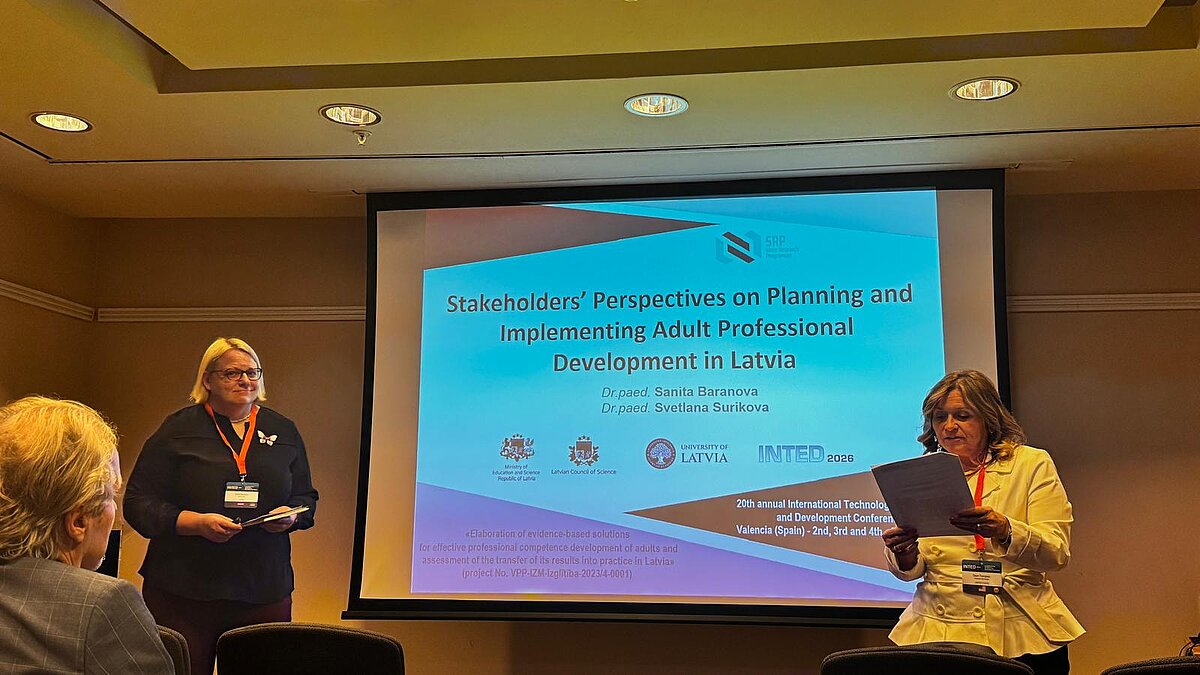
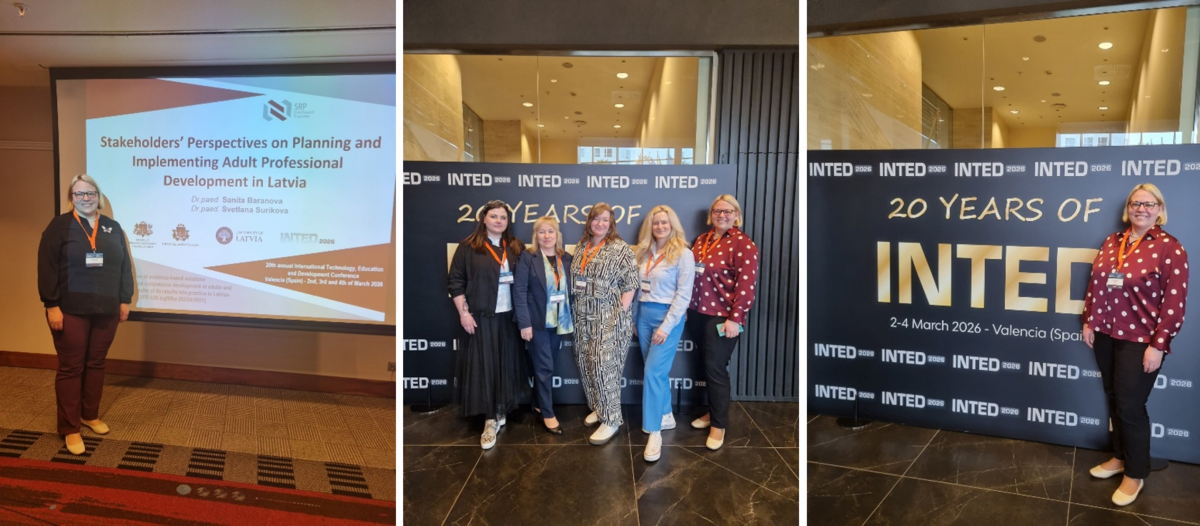
From 2 to 4 March 2026, the leading researcher of the State Research Programme (SRP) “Education” project “Elaboration of evidence-based solutions for effective professional competence development of adults and assessment of the transfer of its results into practice in Latvia” (project No. VPP-IZM-Izglītība-2023/4-0001), Sanita Baranova, participated in the international conference International Technology, Education and Development Conference (INTED2026), which took place in Valencia, Spain.
At the conference, a paper entitled “Stakeholders’ Perspectives on Planning and Implementing Adult Professional Development in Latvia”, prepared jointly with the project leader and lead researcher Svetlana Surikova, was presented. The paper included the results of focus group interviews conducted within the project, addressing how various stakeholders involved in adult professional development assess the planning and implementation of adult professional development. The analysis of the results focused on eight key categories: identification of learning needs, collaboration, examples of good practice, support during training, support in the workplace, administrative resources, financial resources, and human resources.
This year marked the twentieth consecutive year of the conference, which brought together more than 700 education experts, researchers and policy makers not only from Europe, but also from Australia, South America, North America and Africa. The range of conference topics was very broad and included global issues and trends in education and research, new challenges in education and international cooperation, pedagogical methods and innovations, teacher education and professional development, the latest technologies in education, accreditation and educational quality, curriculum development, collaboration between higher education institutions and industry, the development of e-learning content, and open educational resources.
The conference programme included parallel sessions across several thematic areas, designed to maximise participant engagement through a variety of formats, including oral presentations, interactive sessions, and poster presentations. These formats facilitated the exchange of experience and created opportunities for collaboration among representatives from different countries.
Within the framework of the conference, significant directions for the development of education were discussed, including digital and distance learning, innovative educational technologies, a student-centred approach, professional development for adults (including teachers), and the creation of inclusive and diverse learning environments. Particular attention was also paid to educational quality and the STEM field. However, the central theme of the conference focused on the impact of artificial intelligence on the learning process, especially on the development of durable skills and assessment in the age of artificial intelligence, emphasising the need to ensure the sustainability of educational content and the well-being of participants in the learning process.