CONFERENCE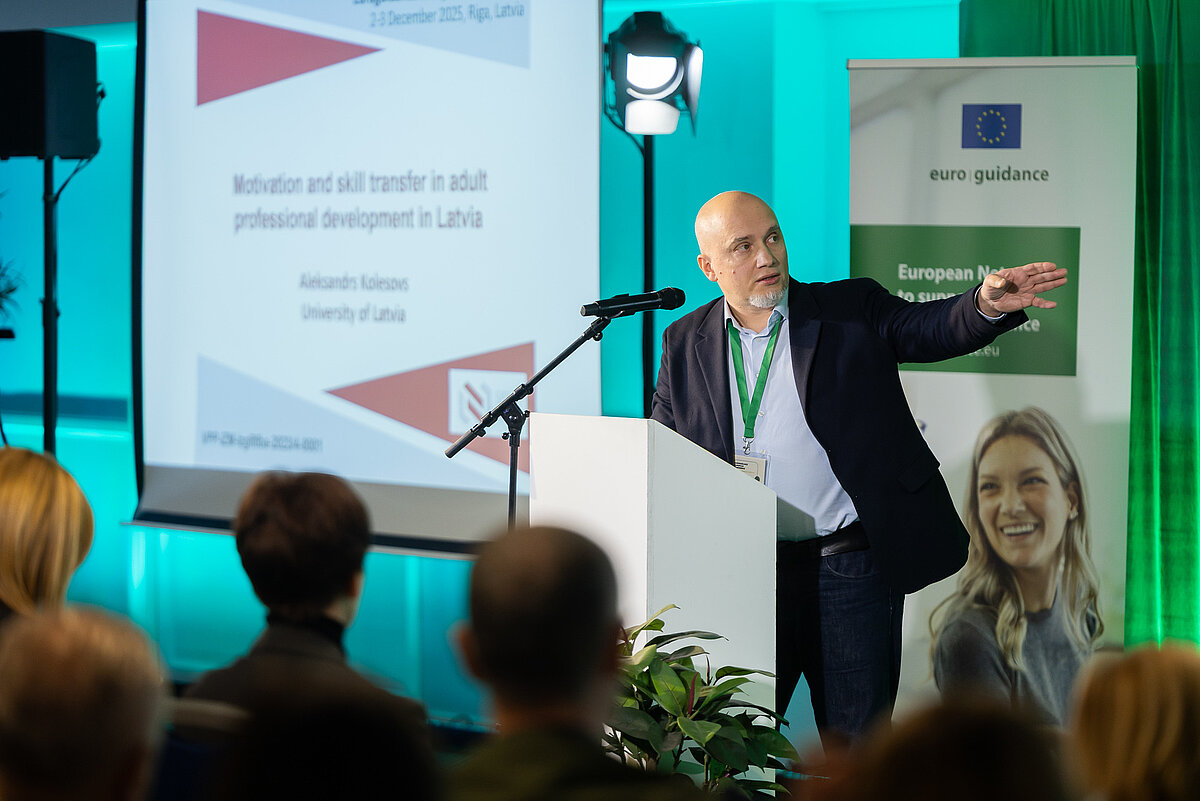
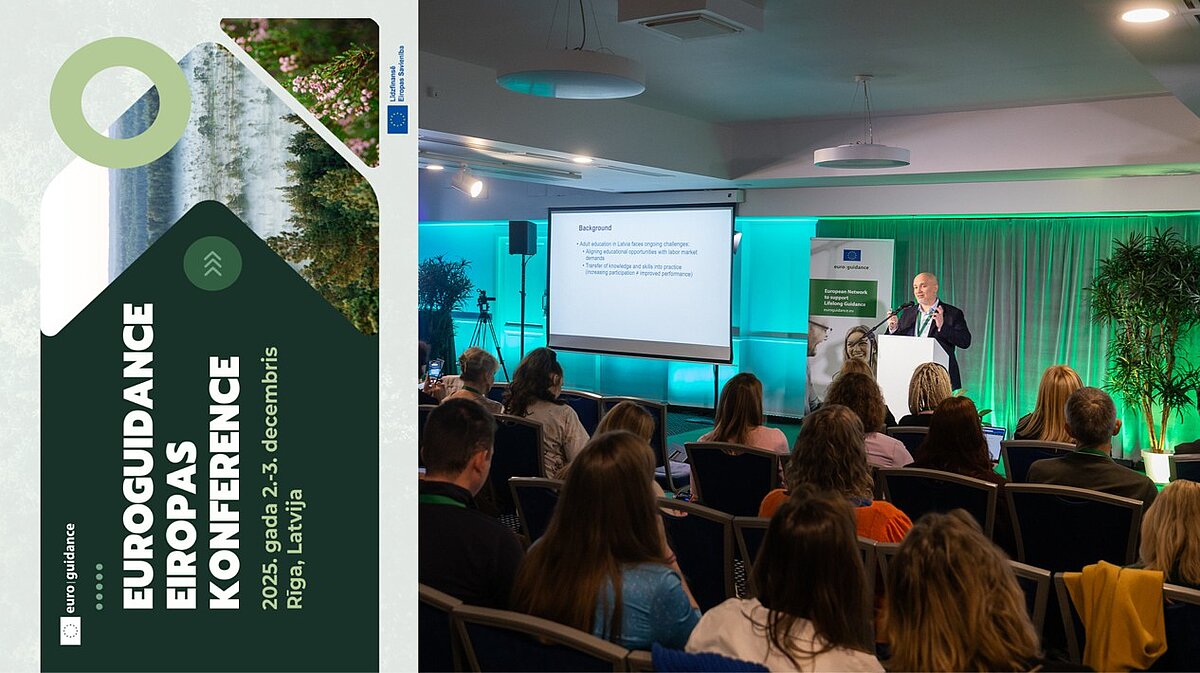
On 2–3 December 2025, the international Euroguidance Network conference “Sustaining Guidance within the Union of Skills” took place in Riga, organised by the State Education Development Agency within the framework of the Global Careers Month. The conference brought together experts from international organisations, policy makers, and representatives of the academic community, providing an interdisciplinary perspective on career development issues.
The conference was also attended by Professor Aleksandrs Koļesovs of the University of Latvia, Lead Researcher of the State Research Programme (SRP) “Education” project “Elaboration of evidence-based solutions for effective professional competence development of adults and assessment of the transfer of its results into practice in Latvia” (project No. VPP-IZM-Izglītība-2023/4-0001). He delivered a presentation entitled “Motivation and Skill Transfer in Adult Professional Development in Latvia”. In his report, Aleksandrs Koļesovs outlined research findings on Latvian adults’ motivation for professional development, as well as the transfer of knowledge and skills into professional practice. The study drew on extensive empirical data – 14 focus-group discussions with 129 participants (November–December 2024). Analysis of the focus-group data showed that, in the process of professional development, adults most wish to improve their knowledge and practical skills, foster personal growth, and enhance their well-being and productivity. At the same time, it was found that the effectiveness of learning is promoted by voluntary participation, a learner-centred approach, and practice-based teaching methods. Organisational culture – particularly support from management and colleagues – plays a significant role in enabling the use of acquired skills in the workplace. In evaluating programmes, participants most frequently highlighted personal gains, programme quality, and satisfaction with the content and instructors.
The presentation went on to analyse data from a 2025 survey of 1,000 adults, 517 of whom had taken part in professional development activities during the previous 12 months (before the survey). The data analysis resulted in the development of a six-component model encompassing internal and external motivation for participation in learning, motivation for knowledge and skills transfer, growth orientation, course evaluation, and organisational support. The results of the structural equation modelling revealed the complex relationships between motivation to take part in learning, course content, organisational support, and the intention to apply the knowledge acquired in practice.