CONFERENCE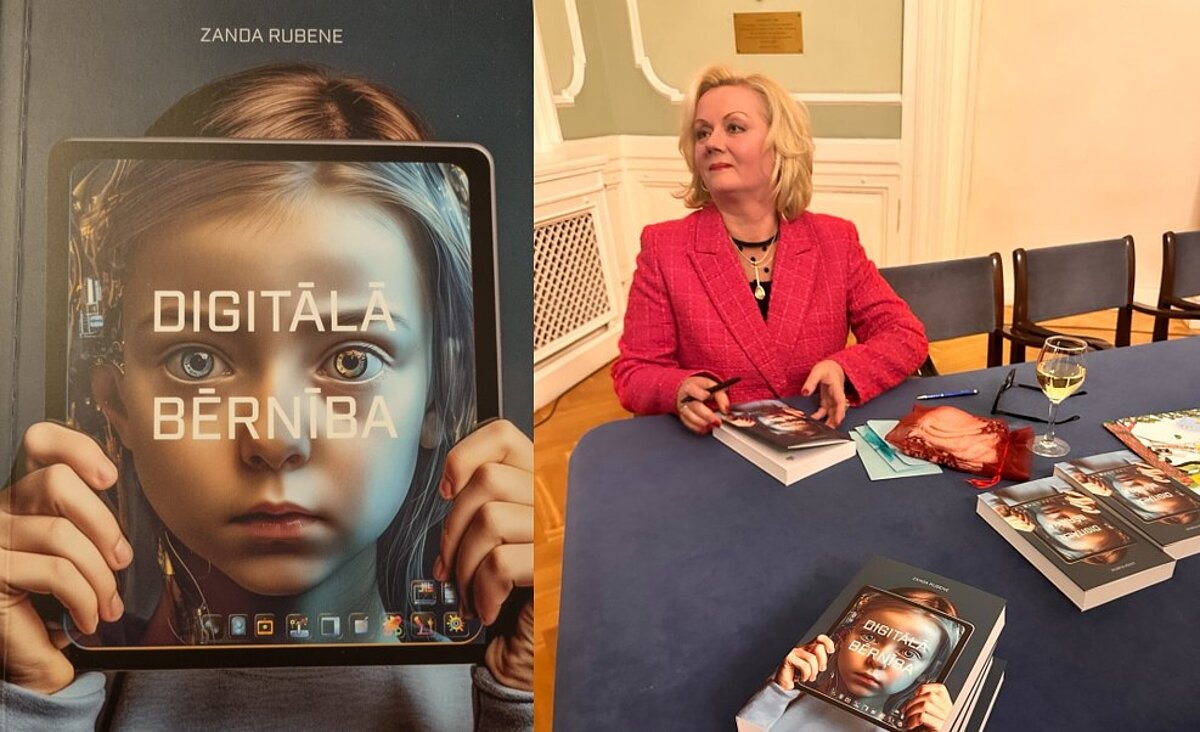
Dr paed. Sanita Baranova and Dr paed. Svetlana Surikova, senior researchers at the Scientific Institute of Pedagogy of the Faculty of Education Sciences and Psychology, University of Latvia (UL FESP SIP) are involved in implementing the ERASMUS+ KA2 Strategic Partnership project “REMAP: Reading for Meaning and Purpose”. As part of the REMAP project, an interview is being conducted with Zanda Rubene, a professor at the University of Latvia and leading researcher at the UL FESP SIP, about reading as pleasure, work and inspiration.
Please briefly introduce yourself and describe your experience in academic work.
My name is Zanda Rubene and I am from the University of Latvia, where I am a professor and lead researcher in the fields of educational philosophy and pedagogical anthropology. I teach courses in master's and doctoral programmes and also have administrative responsibilities: I head the Doctoral School at the University of Latvia. The courses I teach focus on the philosophy of education, research ethics, and digital transformation.
What does reading mean to you?
Reading is, above all, a pleasure for me, because reading changes people. I am firmly convinced of this, partly because before studying education sciences I studied philology and philosophy, which required me to read extensively. Both my bachelor’s and master’s programmes involved reading lists, and our main task was to read—we spent countless hours in the library. This was at the end of the 20th century, in the late 1980s and early 1990s, and I believe that my worldview—my way of seeing the world—was shaped profoundly by books and reading.
Which book has made an impact on your life? Why or how? Would you recommend it to students—or, if not, would you recommend a different one?
The book that has had the greatest impact on my life is Mikhail Bulgakov’s The Master and Margarita. When I first picked it up, I was 18 years old. My mother warned me that I was too young, that I would not understand it, and that it was not worth reading. But this book has accompanied me throughout my life. It is a book about love, philosophy, religion, God, and politics. It is a very sad yet at the same time very comical work, one that teaches trust and belief. In serious moments of my life, I return to this book and reread it. Would I recommend it to students? Yes, absolutely. I think it can be especially valuable in a philosophy course. Considering the context of the post-Soviet space—which I represent—and the fact that today’s students have no memory of this period and may see it only through distortions or preconceptions, this book could be extremely useful.
Has going to university or becoming a university professor changed how you read? Is reading for pleasure the same as reading for disciplinary purposes?
Academic reading is, of course, different from reading for pleasure. I am a professional reader: I read for my research, I read my students’ work, and so on. I sometimes joke that in the evenings after work, I no longer want to see any letters at all. Becoming a university lecturer has definitely changed my reading habits. I read far more of what I must read—what is required for my professional responsibilities. When I am on holiday, I read lighter texts, fiction—things I simply do not have time for during the working year. I feel that I cannot devote any of the 24 hours in my day to reading something that is not directly necessary for my work. Another thing that has changed is the speed at which I read. I read very quickly now—so much so that my husband sometimes doubts whether I have actually read a book when I finish 300 or 400 pages in two days on holiday. But I really have learned to read extremely quickly. I once took part in an optometry study on eye movements during reading and was invited as a “reading professional”—and I still consider myself one.
Match favourite reading moments, referring to a place or a situation.
My favourite moments for reading are in summer and during holidays, as I mentioned earlier. My ideal reading moment is by the sea or the pool, in the shade, on a terrace or under a parasol—perhaps with a cup of morning coffee if I am on the terrace. I savour unhurried reading, with time to go back and revisit sentences I want to remember or re-experience. It is truly one of my greatest pleasures in life: coffee and reading on the beach. It does not matter whether it is morning or evening. Another favourite reading experience—though it is not a moment but a way of being—is that if I really love a book, I find it very difficult to put it down. If I am on holiday and can allow myself the time, I will read all night until six or seven in the morning, right to the end. Once I start, I want to finish. If I do not have to work the next day, I do this with great delight.
Have any authors inspired your writing? Which reading experiences have been especially meaningful in this context?
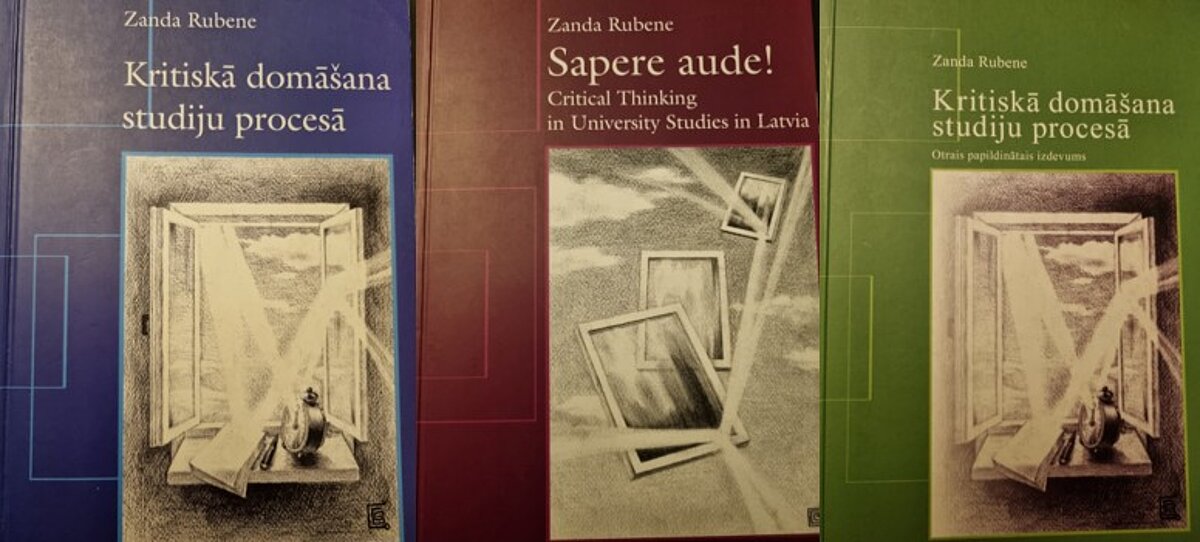
It is difficult for me to say which authors may have inspired my writing, because the books I write are academic research works; I do not write fiction. I wrote a book on critical thinking at university, first published in 2004 (in the same year, a book based on my research was also published in English: Sapere aude! Critical thinking in university studies in Latvia). In 2008 I added a chapter, and a second, expanded edition was released. My second monograph, Digital Childhood, was published in Latvian in 2024. Naturally, everything I had read and researched about digital childhood shaped the writing of this book. Neil Postman and his writings have been particularly important to me in this context. Immanuel Kant has also always been very important to me. Although his works are not easy to read, the texts related to critical thinking and pedagogical anthropology are not among his most complex. In recent years, however, I have been deeply fascinated by the genre known as non-fiction or popular science literature. I would say it is perhaps not a particular author, but the genre itself, that has influenced my writing.
How has your experience as a book author influenced your view of reading? Do you read differently since you started writing books? Has writing changed your relationship with reading?
I have never really thought about whether I read differently since I began writing books. Perhaps I pay more attention to ideas when I read—ideas or thoughts that I want to remember and keep. Since my book has become quite popular in Latvia, readers often ask me what my next book will be about. In this sense, my experience as an author has influenced how I read: I am always trying to sense or discover the idea for the next book. Since I began writing books, I also notice many more stylistic errors and awkward phrasing in other authors’ works. At the same time, I read some sentences with great respect and admiration—sentences I know I could never have invented myself.